


Greg Biffle stands as one of NASCAR’s most accomplished drivers, with a career spanning nearly two decades at the sport’s highest levels. From his humble beginnings in Vancouver, Washington, to becoming a multi-series champion, Biffle’s journey embodies the quintessential American racing success story. His tenacity behind the wheel, technical expertise, and ability to extract maximum performance from his vehicles made him a formidable competitor throughout his career. This article explores Biffle’s remarkable racing achievements, his distinctive driving style, and the lasting impact he’s had on NASCAR.
Greg Biffle began his racing career in the Pacific Northwest, far from NASCAR’s traditional southeastern roots.
Early Life and Racing Beginnings
Born on December 23, 1969, in Vancouver, Washington, Greg Biffle grew up far from the traditional NASCAR hotbeds of the Southeast. His passion for speed manifested early—at just five years old, he was already riding motorcycles, and by 14, he had purchased his first car, a Formula Firebird that quickly became notorious among local law enforcement for its driver’s penchant for speed.
Biffle’s formal racing career began at Portland Speedway, a half-mile short track where his father took him in hopes of channeling his son’s speed obsession into a safer environment. This move proved pivotal, as Biffle quickly demonstrated natural talent behind the wheel. He cut his teeth in the local racing scene, competing in late model street stocks while harboring dreams that seemed almost impossible for a racer from the Pacific Northwest—making it to NASCAR’s top levels.
What set Biffle apart during these formative years was his mechanical aptitude. Unlike many drivers who focused solely on driving, Biffle immersed himself in the technical aspects of his vehicles, often building and maintaining his own race cars. This hands-on approach would later prove invaluable throughout his professional career, giving him unique insights into vehicle performance and setup.
The Breakthrough: From Obscurity to NASCAR
By his late twenties, Biffle faced a critical juncture in his racing career. Despite accumulating wins in regional competitions, he remained virtually unknown to the NASCAR establishment. With his racing funds nearly depleted and time running out on his dreams, Biffle made a bold move that would change the trajectory of his career.
In a last-ditch effort to gain national attention, Biffle towed his late model to Tucson, Arizona, to participate in the ESPN-televised NASCAR Winter Heat Series. This decision proved fortuitous when NASCAR champion-turned-commentator Benny Parsons noticed Biffle’s exceptional talent during a conversation in the Tucson Raceway infield.
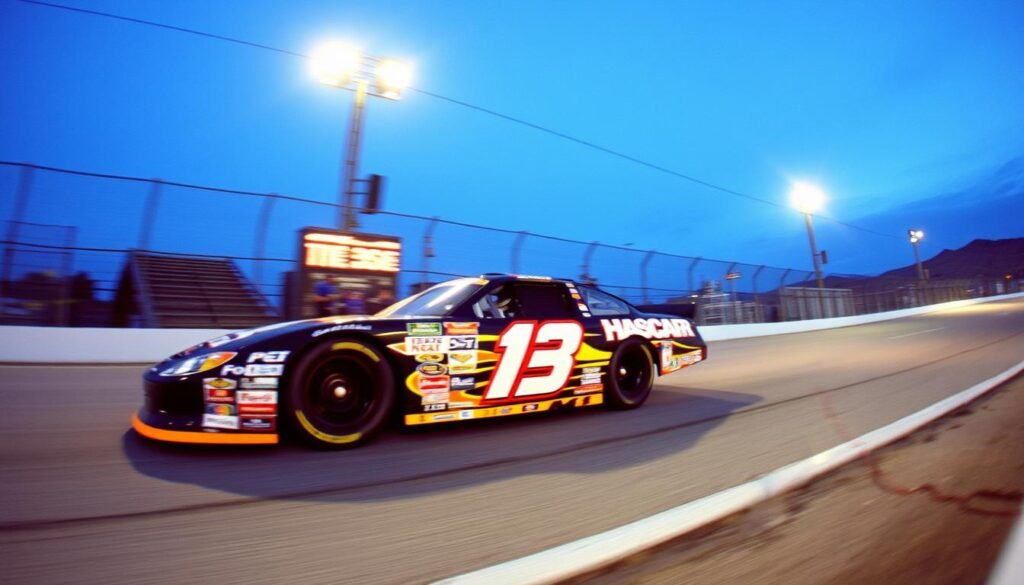
Biffle’s participation in the NASCAR Winter Heat Series caught the attention of Benny Parsons, leading to his big break.
Impressed by what he saw, Parsons made a career-defining phone call to team owner Jack Roush, recommending Biffle sight unseen. This endorsement led to Biffle’s first opportunity in NASCAR’s Craftsman Truck Series in 1998, though the transition wasn’t immediately smooth. Biffle’s aggressive driving style resulted in numerous crashes, prompting Roush to implement a “negative incentive” program—financial penalties that escalated with each at-fault accident.
The pressure proved effective. Biffle quickly adapted his driving style while maintaining his competitive edge, setting the stage for what would become one of the most impressive career trajectories in modern NASCAR history.
Dominance in Truck and Xfinity Series
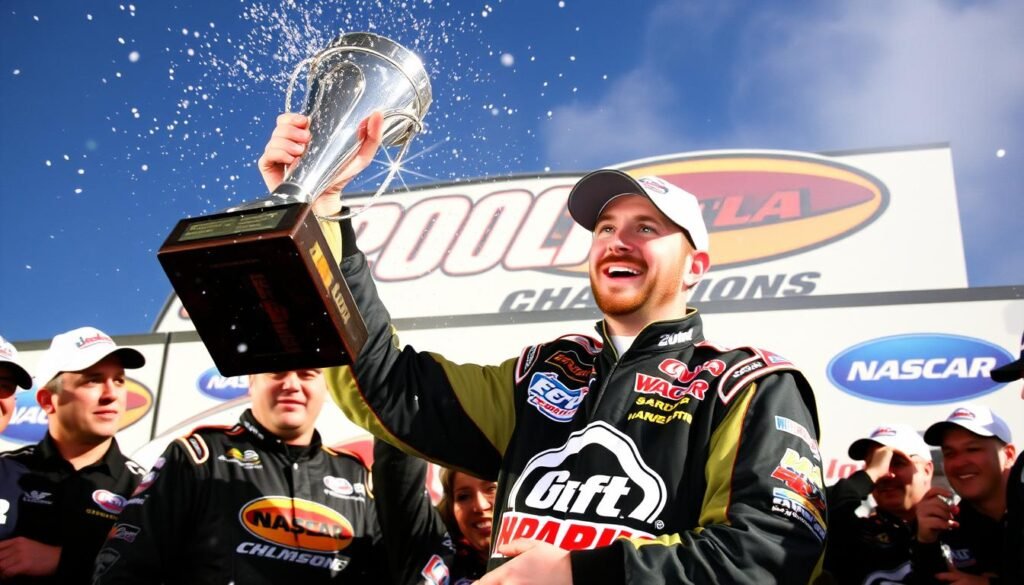
Biffle celebrates his 2000 NASCAR Craftsman Truck Series championship, establishing himself as a rising star.
Once Biffle found his footing in NASCAR’s national series, his rise was meteoric. In 1999, his first full season in the Craftsman Truck Series, he won an impressive nine races, showcasing the raw talent that Parsons had identified. This performance set the stage for 2000, when Biffle claimed the Truck Series championship, establishing himself as one of NASCAR’s brightest prospects.
Biffle’s success prompted Roush to promote him to the NASCAR Busch Series (now known as the Xfinity Series) in 2001. The transition proved seamless as Biffle won Rookie of the Year honors, demonstrating his adaptability to different racing vehicles. The following year, he captured the 2002 Busch Series championship, winning five races and establishing a pattern of excellence that would become his trademark.
2000 Truck Series Championship Highlights
- 5 race victories during championship season
- 18 top-10 finishes in 24 races
- Led 865 laps throughout the season
- Defeated veteran drivers with years more experience
- First major NASCAR championship for Biffle
2002 Busch Series Championship Highlights
- 4 race victories during championship season
- 20 top-5 finishes showing remarkable consistency
- Led over 1,000 laps throughout the season
- Clinched championship with one race remaining
- Became a prime candidate for Cup Series promotion
These championship victories were historically significant, as Biffle became the first driver to win championships in both the Truck Series and Busch Series. This accomplishment underscored his versatility and adaptability—qualities that would serve him well as he prepared to take on NASCAR’s premier division.
Cup Series Career: Victories and Near Championships
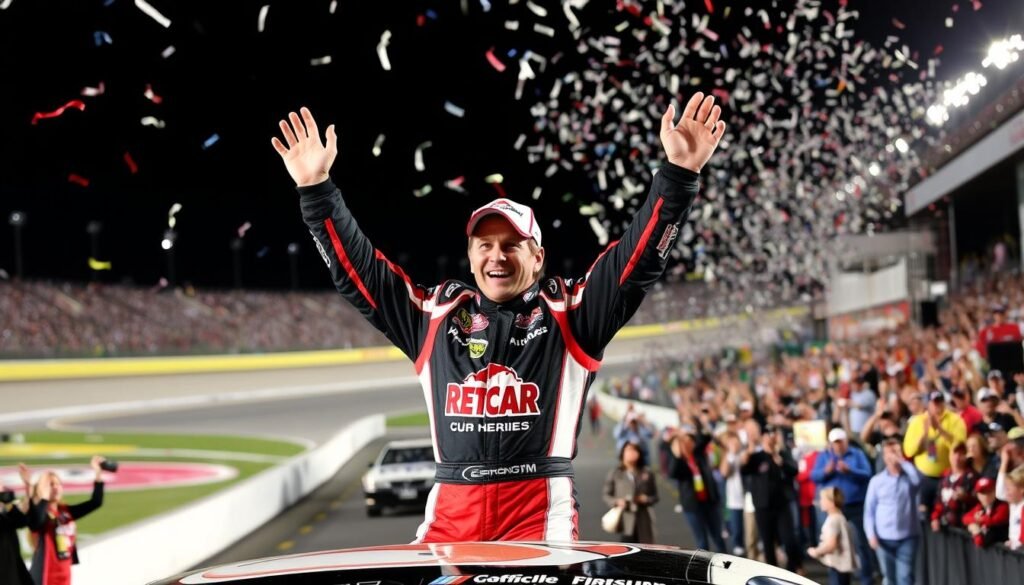
Biffle celebrates one of his 19 NASCAR Cup Series victories during his career with Roush Fenway Racing.
Biffle made his Cup Series debut in 2002, running a limited schedule before embarking on his first full-time campaign in 2003. His impact was immediate, as he claimed Rookie of the Year honors, becoming the first driver in NASCAR history to win this award in all three national series—a testament to his exceptional adaptability and consistent performance across different racing formats.
The 2005 season marked Biffle’s breakthrough at NASCAR’s highest level. He won a series-leading six races and finished second in the championship standings to Tony Stewart by just 35 points. This campaign showcased Biffle at the height of his powers, demonstrating an aggressive yet calculated driving style that made him particularly effective on intermediate tracks.
| Year | Wins | Top 5s | Top 10s | Championship Position | Notable Achievements |
| 2003 | 1 | 3 | 7 | 20th | Rookie of the Year |
| 2005 | 6 | 15 | 21 | 2nd | Series leader in wins |
| 2008 | 2 | 7 | 12 | 3rd | First driver to win first two Chase races |
| 2010 | 2 | 9 | 19 | 6th | Career resurgence after winless 2009 |
| 2012 | 2 | 12 | 21 | 5th | Michigan win broke 49-race winless streak |
Biffle came close to championship glory again in 2008, finishing third in the standings behind Jimmie Johnson and Carl Edwards. Throughout his Cup Series career, which included 19 victories, Biffle established himself as a model of consistency, finishing in the top 10 in points six times. His ability to extract maximum performance from his vehicles, particularly on high-speed intermediate tracks, became his calling card.

Biffle was known for his exceptional skill on intermediate tracks throughout his Cup Series career.
Driving Style and Technical Expertise
What set Greg Biffle apart from many of his contemporaries was his unique combination of aggressive driving and technical understanding. His background as a hands-on mechanic who built his own cars in his early career gave him insights that many drivers lacked. This technical knowledge allowed him to communicate effectively with his crew chiefs, providing detailed feedback that helped optimize his vehicles’ performance.
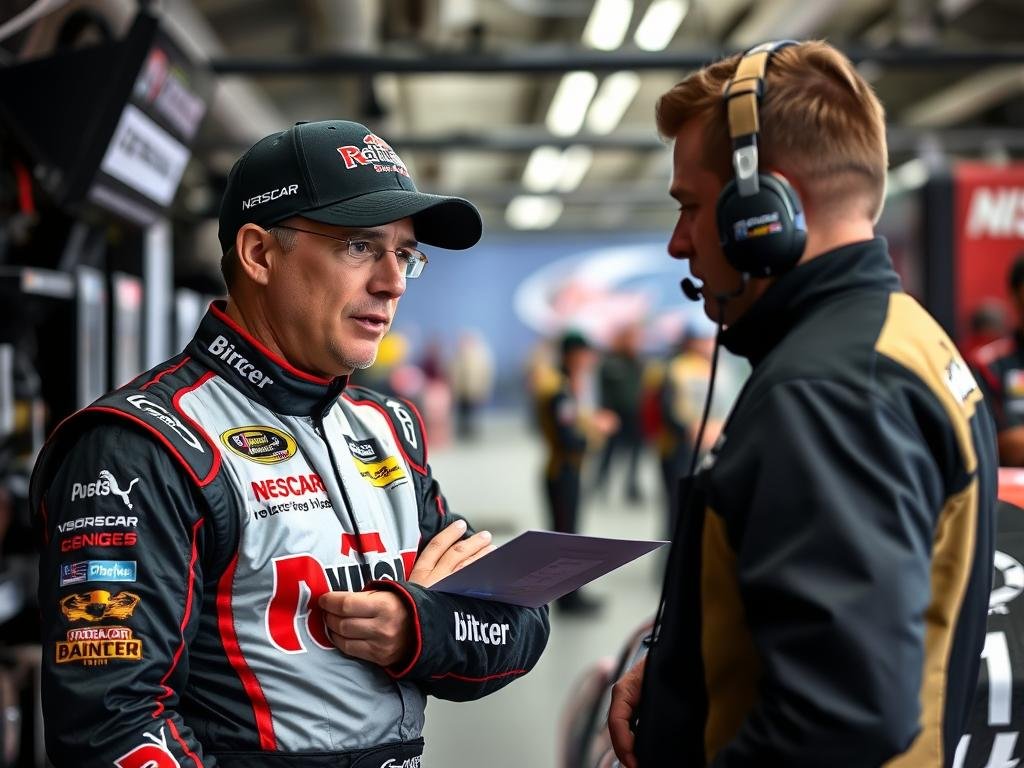
Biffle’s technical knowledge and ability to communicate with his crew were key components of his success.
“I still have grease under my nails. Some of it is from 30 years ago building my own late models, and it’s mixed with some from my truck I was working on last night.”
On the track, Biffle was known for his aggressive yet calculated approach. He was particularly effective on 1.5-mile intermediate tracks, where his smooth driving style and ability to manage tire wear gave him a competitive edge. Biffle’s car control was exceptional, allowing him to push his vehicles to their limits without crossing the line into recklessness.
Another hallmark of Biffle’s driving was his adaptability. Throughout his career, NASCAR implemented numerous rule changes and introduced different car models, from the Gen-4 to the Car of Tomorrow. Biffle’s technical understanding helped him adjust quickly to these changes, maintaining his competitiveness across different eras of NASCAR competition.
Team Affiliations: The Roush Racing Legacy
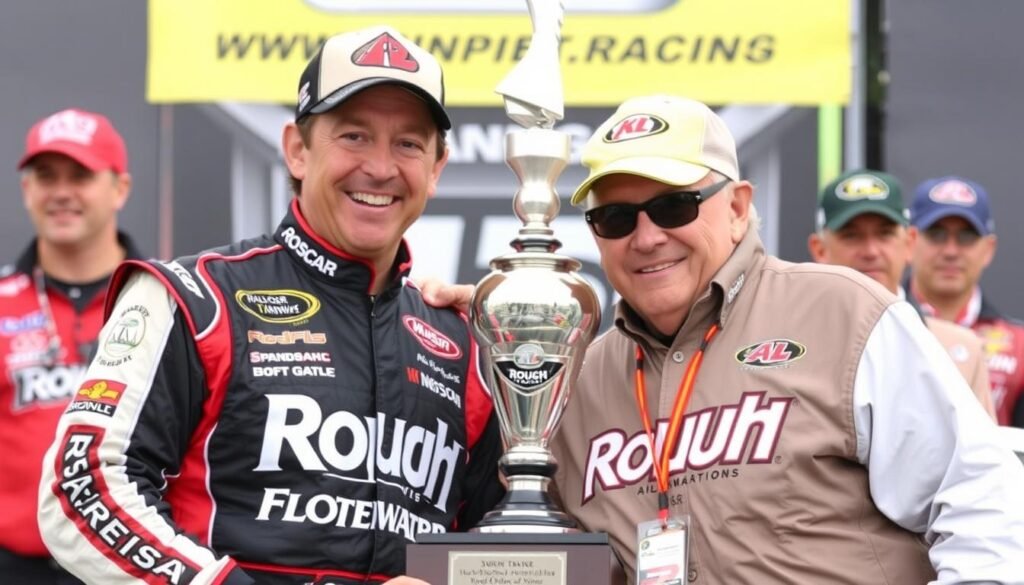
Biffle and team owner Jack Roush formed one of NASCAR’s most successful partnerships.
Greg Biffle’s NASCAR career is inextricably linked with Roush Racing (later Roush Fenway Racing). The partnership between Biffle and team owner Jack Roush stands as one of the most enduring and successful in modern NASCAR history. From his Truck Series debut in 1998 to his final full-time Cup Series season in 2016, Biffle remained loyal to the Roush organization—a rarity in an era of frequent driver movement.
This loyalty was mutual. When Biffle struggled during his early Truck Series days, Roush didn’t give up on him, instead implementing a structured approach to help Biffle refine his driving style. This patience paid dividends as Biffle developed into one of the team’s most successful drivers, contributing significantly to Roush Racing’s prominence during the 2000s.
Biffle was part of a formidable Roush Racing lineup that included fellow stars Carl Edwards, Matt Kenseth, Kurt Busch, and Mark Martin. During the mid-2000s, this driver roster made Roush Racing a dominant force in NASCAR, regularly challenging Hendrick Motorsports and Joe Gibbs Racing for supremacy. The 2005 season was particularly notable, with Biffle, Edwards, and Kenseth all finishing in the top five in the championship standings.
Notable Roush Racing Teammates
- Mark Martin – NASCAR Hall of Famer and mentor
- Matt Kenseth – 2003 Cup Series Champion
- Carl Edwards – 28-time Cup Series winner
- Kurt Busch – 2004 Cup Series Champion
- Jamie McMurray – Daytona 500 and Brickyard 400 winner
Biffle’s Contributions to Roush Racing
- 19 Cup Series victories
- First driver to win championships in Truck and Xfinity Series
- Helped develop Ford racing technology
- Consistent championship contender
- One of the longest-tenured drivers in team history
Throughout his time with Roush, Biffle was instrumental in developing Ford’s racing technology, working closely with engineers to improve vehicle performance. His technical feedback proved invaluable during the transition to new car models and through various rule changes, helping the organization maintain its competitive edge in an ever-evolving sport.
Memorable Career Moments
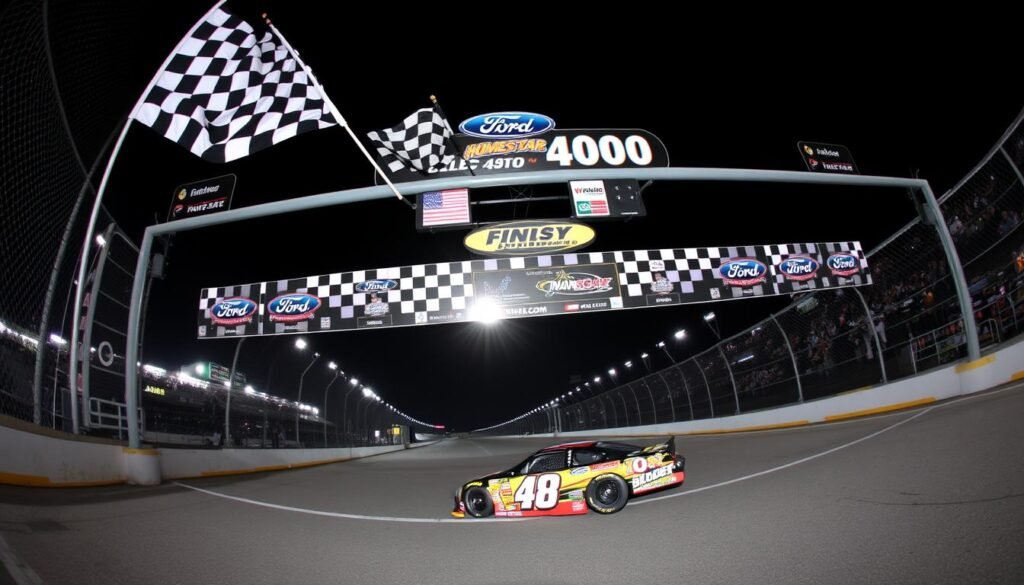
Biffle’s victory at the 2010 Ford 400 at Homestead-Miami Speedway was one of his most memorable wins.
Throughout his NASCAR career, Greg Biffle produced numerous memorable moments that showcased his exceptional talent and competitive spirit. His first Cup Series victory came at Daytona International Speedway in July 2003, a significant achievement for any driver but especially meaningful for Biffle as it validated his promotion to NASCAR’s premier series.
The 2005 season produced several standout moments, including Biffle’s dominating performance at Texas Motor Speedway, where he led 219 of 334 laps en route to victory. This win was part of his series-leading six victories that season, establishing him as a legitimate championship contender.
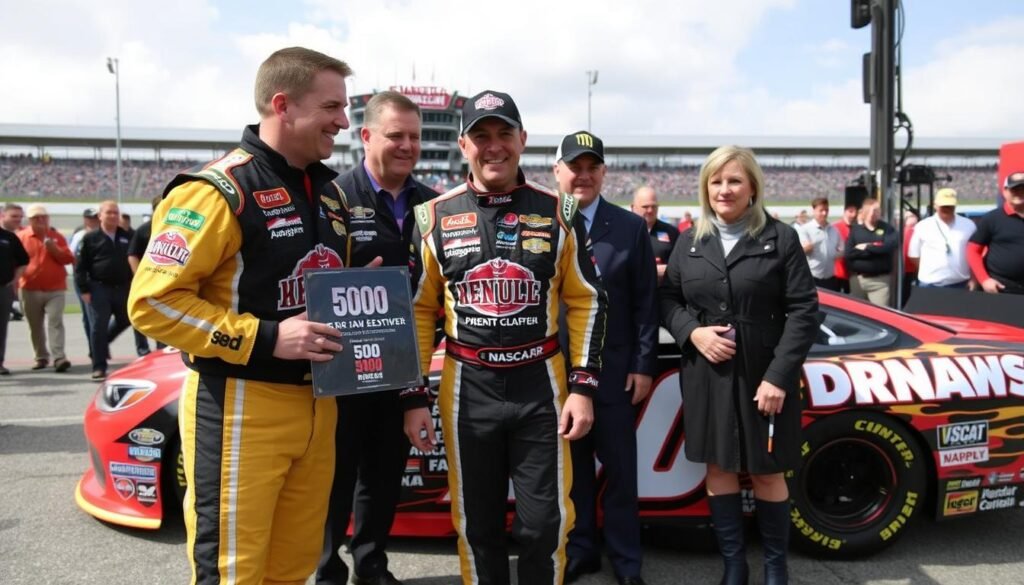
Biffle achieved the remarkable milestone of 500 consecutive NASCAR starts during his career.
Perhaps one of Biffle’s most significant career achievements came in 2008 when he became the first driver to win the first two races in the Chase for the Cup playoff format, taking victories at New Hampshire Motor Speedway and Dover International Speedway. These back-to-back wins catapulted him into championship contention, though he would ultimately finish third in the standings.
Biffle’s victory at Michigan International Speedway in 2012 held special significance as it marked Ford’s 1,000th win across NASCAR’s national series. This historic achievement highlighted Biffle’s important role as one of Ford’s premier drivers and his contribution to the manufacturer’s racing legacy.
In 2013, Biffle delivered an emotional win at Michigan on Father’s Day, dedicating the victory to his father. This personal moment, shared with millions of fans, showcased the human side of a driver often known for his technical precision and calculated approach to racing.
Post-Racing Career and Legacy

After stepping back from full-time racing, Biffle remained active in motorsports and humanitarian efforts.
After stepping away from full-time Cup Series competition following the 2016 season, Greg Biffle didn’t completely leave the racing world. He made occasional returns to competition, including running the 2019 NASCAR Truck Series race at Texas Motor Speedway, where he demonstrated that his skills remained sharp by winning in his first Truck Series start in over 15 years.
In 2022, Biffle returned to the Daytona 500 at age 52, showcasing his enduring passion for competition. Beyond driving, he transitioned to television work, providing expert commentary and analysis for racing broadcasts, where his technical knowledge and firsthand experience offered viewers valuable insights.
Biffle’s technical expertise found expression in his post-racing life through his continued work fabricating cars in his personal shop. He also diversified his business interests, including running a quarry in Virginia, demonstrating the same work ethic and attention to detail that characterized his racing career.
In 2023, NASCAR recognized Biffle’s contributions to the sport by naming him one of the 75 greatest drivers in its history as part of the organization’s 75th anniversary celebration. This honor cemented his legacy as one of the sport’s most accomplished competitors. His nomination for the NASCAR Hall of Fame further validated his significant impact on stock car racing.
Beyond his racing accomplishments, Biffle established the Greg Biffle Foundation, which focused on animal welfare causes. This philanthropic work revealed another dimension of his character, demonstrating his commitment to making a positive impact beyond the racetrack.
Conclusion: A True Racing Champion
Greg Biffle’s career spanned multiple eras of NASCAR, leaving an indelible mark on the sport.
Greg Biffle’s NASCAR journey represents one of the sport’s most compelling success stories. From his unlikely beginnings in the Pacific Northwest to becoming a multi-series champion and one of NASCAR’s 75 greatest drivers, Biffle’s career exemplifies the possibilities that exist for those with exceptional talent, determination, and work ethic.
His technical expertise, aggressive yet calculated driving style, and remarkable adaptability allowed him to remain competitive across different eras of NASCAR competition. The 19 Cup Series victories, two national series championships, and consistent presence in championship battles establish Biffle as one of the most accomplished drivers of his generation.
Perhaps most remarkably, Biffle achieved all this while maintaining his authentic character—a blue-collar racer who never forgot his roots building cars in his garage. This authenticity resonated with fans and earned him respect throughout the NASCAR community.
As NASCAR continues to evolve, Greg Biffle’s legacy stands as a testament to the enduring values of hard work, technical excellence, and competitive spirit that define the best of American motorsports. His career serves as an inspiration for aspiring racers everywhere, particularly those from non-traditional racing backgrounds who dream of competing at the highest levels of NASCAR.
Stay Connected with NASCAR History
Enjoyed learning about Greg Biffle’s remarkable career? Subscribe to our newsletter for more in-depth profiles of NASCAR legends, historical race analyses, and exclusive content about the drivers who shaped the sport.










Leave a Reply